
Trenchless drain repair
Pipe relining across Sydney
Pipe relining is one of TotalCare’s drainage repair options. We assess the damaged section before recommending an internal repair or discussing another approach.
Call Tommy
0410 908 209Reviews provided by 
Where relining can fit
A repair method, not a default answer
Relining can reduce excavation for a suitable section, but only after the pipe condition, access and defect are understood.
A localised damaged section
Cracks, joints or another defined defect may suit a targeted internal repair.
Useful access to the line
The pipe must be reachable for preparation, inspection and the proposed repair method.
A pipe that can support a liner
The host pipe needs enough continuity and alignment for the liner to be installed as intended.
A reason to reduce excavation
Paving, landscaping or access constraints can make a suitable trenchless option worth comparing.
Suitability first
See inside the pipe before recommending a liner
A blockage may need to be cleared and the accessible line inspected before the repair options are clear.
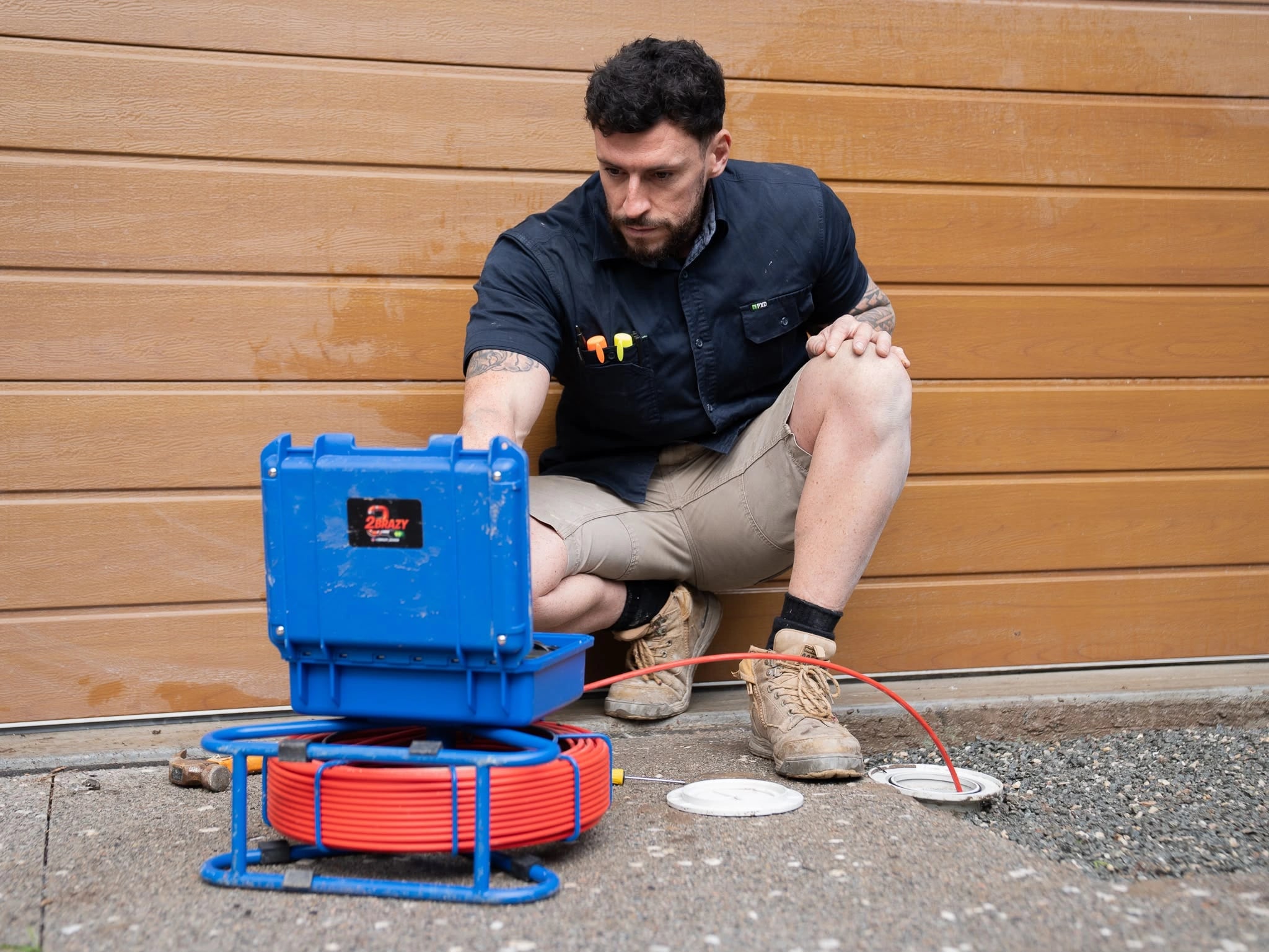
CCTV condition review
Inspect suitable accessible pipework to identify the location and character of the defect.
Access and preparation
Confirm the line can be reached and prepared for the proposed repair.
Relining suitability
Assess whether the host pipe can support an internal liner in the agreed section.
Alternative repair direction
Explain when excavation, replacement or another method is more appropriate.
Compare the repair path
Relining or excavation depends on the defect
The least disruptive option is only useful if it creates a suitable repair for the condition found.
The host pipe remains aligned and can support a liner.
The line is collapsed, badly displaced or cannot be prepared reliably.
Suitable access exists for inspection, preparation and installation.
The damaged area or line cannot be reached by the proposed internal method.
Avoiding broad excavation would protect paving, landscaping or access.
Direct access is needed to correct the pipe position, connection or surrounding issue.
Assessment path
From recurring fault to repair decision
The drain needs to be clear enough to inspect before the repair method can be chosen.
Understand the history
Record recurring blockages, previous repairs and the parts of the property affected.
Clear and inspect where suitable
Create suitable access and use CCTV to inspect the relevant section.
Define the defect and access
Confirm its position, apparent condition and the practical constraints around the line.
Compare the repair options
Discuss relining and alternatives against the condition found before work is agreed.
Common questions
Pipe relining questions
Can every broken drain be relined?
No. A collapsed, badly displaced or inaccessible line may need another repair method.
Will the drain be inspected first?
Yes. The relevant section needs to be assessed so the condition, location and access are understood before relining is recommended.
Does relining mean there is no digging at all?
Not necessarily. It can reduce excavation for a suitable section, but access and surrounding work depend on the property and defect.
Is pipe relining the same as clearing a blockage?
No. Clearing restores flow. Relining repairs a suitable damaged section and is considered after the cause and pipe condition are understood.
How is relining compared with excavation?
The pipe condition, alignment, access, defect and surfaces above it all affect which repair is appropriate.
Need a plumber?
Speak directly with Tommy
Call for urgent help, or send the job details when the work can be planned.